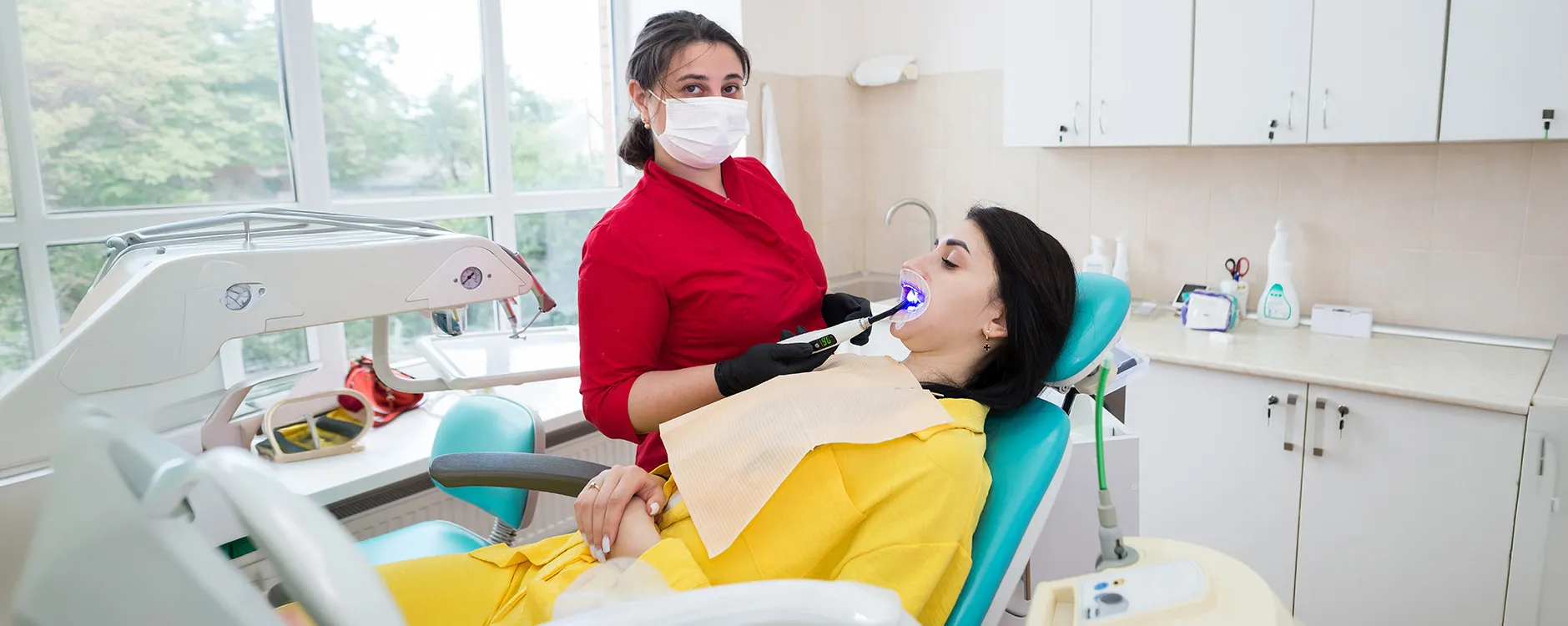
Complete Guide to Orthodontic Coding for Your Dental Practice
Orthodontic billing overwhelms practices with multi-year treatment timelines, dentition-stage coding, lifetime maximums, and denials that cascade across entire cases. Core CDT codes span D8010–D8040 for limited treatment and D8070–D8090 for comprehensive care, each tied to primary, transitional, adolescent, or adult dentition. Documentation must justify phase, start date, and medical necessity. Common errors include mismatching dentition stage to age, billing periodic visits separately, skipping lifetime maximum verification, and inconsistent claim schedules.
CDT 2027 adds D8689 for fixed appliance re-cementation, revises D8210/D8220 for adjunctive therapy, and updates D8696/D8697 for appliance repairs. Some cases, such as craniofacial conditions, trauma, jaw deformities, sleep apnea, require medical cross-coding with CPT and ICD-10 codes. Staying current with CDT updates, tracking multi-year payment schedules, and understanding payer rules are essential. Outsourcing to orthodontic billing specialists like TransDontics reduces denials, speeds reimbursements, and frees clinical teams to focus on patient care.
Key Takeaways:
- Treatment phase matters. Limited, comprehensive, and retention services require the correct CDT code for the care provided.
- The dentition stage drives code selection. Match the code to the patient’s clinical dentition stage, not age alone.
- Documentation supports reimbursement. Treatment plans, diagnostic records, photographs, radiographs, and accurate start dates help support orthodontic claims.
- Routine adjustments are usually bundled. Avoid billing periodic visits separately when they are included in the comprehensive treatment fee.
- Verify orthodontic benefits upfront. Lifetime maximums, waiting periods, and adult orthodontic exclusions can affect coverage and patient balances.
- CDT 2027 brings important orthodontic updates. Review revised D8210, D8220, D8696, and D8697, along with new code D8689, before implementation.
- Repairs and transfer cases need careful coding. Appliance type, arch, reason for repair, and transfer circumstances help determine the appropriate code.
- Medical coverage is the exception, not the default. A medical diagnosis alone does not make routine orthodontic treatment eligible for medical insurance.
- Multi-year cases need consistent tracking. Monitoring treatment timelines, periodic claims, documentation, and remaining benefits helps reduce denials and payment delays.
Orthodontic coding is the process of reporting orthodontic treatment by using CDT codes for insurance claims and reimbursement. An orthodontic treatment is provided over an extended period with multiple treatment phases. Precise coding is required to correctly represent the scope of treatment and distinguish between phases for accurate reimbursement.
It includes CDT codes from the D8000 series, which define limited treatment, interceptive treatment, and comprehensive treatment. Each code must be supported by clinical documentation to meet payer requirements.
This article focuses on orthodontic coding mechanics, correct CDT code selection, and common errors that trigger claim denials or delayed reimbursement. Whether you are a solo practitioner, a practice manager using five different software systems, or part of a larger group practice exploring orthodontic billing solutions, this one’s for you.
Why is Orthodontic Coding Different From Other Dental Specialties?
Most dental procedures are one-and-done. A filling happens, you code it, you bill it, it’s over. Orthodontic treatment doesn’t work that way. A single case can span 18 to 36 months, involve dozens of adjustment visits, and require multiple claim submissions across that entire timeline.
That structure alone creates challenges that don’t exist anywhere else in dentistry:
The treatment fee is often billed as one lump sum at the start of care, even though the actual work unfolds over years. Insurance companies frequently have lifetime maximums specifically for orthodontic benefits, separate from a patient’s general annual maximum. Many plans require waiting periods before ortho benefits even apply, and some exclude adult orthodontic treatment entirely. Coverage percentages vary wildly; some plans cover 50% of ortho treatment, others offer nothing at all for anyone over 19.
All of this means that getting the coding right at the very start of a case sets the tone for everything that follows. A miscoded claim in month one doesn’t just cause a single denial. It can cascade into payment delays for the entire treatment plan.
Earn Faster & Right with Accurate Claims and Coding for Orthodontic Procedures
The Orthodontic Code Category: D8000–D8999
Every code related to orthodontic care falls under the D8000 through D8999 range in the CDT code set. Each code in the D8000 series carries significant weight because of the dollar amounts and treatment durations involved.
Before we get into specific codes, let’s understand the four dentition classifications that orthodontic codes are built around, because nearly every code description references one of these stages:
- Primary Dentition refers to early childhood, when a child still has mostly baby teeth.
- Transitional Dentition describes that awkward in-between phase, baby teeth are falling out, permanent teeth are coming in, and the mouth is essentially a construction zone.
- Adolescent Dentition is the stage after most primary teeth have been lost but before facial and jaw growth has finished. This is the classic teenager with braces stage.
- Adult Dentition applies once skeletal growth is complete, meaning treatment options and goals shift somewhat compared to a growing patient.
Coders need to match the patient’s dentition stage to the correct code because billing an adolescent code for an adult patient (or vice versa) is one of the more common and avoidable reasons claims get kicked back. These coding nuances are the main difference between general dental coding and orthodontic coding.
Limited Orthodontic Treatment Codes
Limited treatment codes are for cases where the goal is narrow, maybe correcting a single problem area, rather than a full mouth realignment. These are sometimes called interceptive treatments because they’re often used to head off a bigger problem before it develops.
- D8010 – Limited orthodontic treatment of the primary dentition: Used for young children, typically addressing a specific issue like a crossbite or significant spacing problem, without attempting comprehensive correction of the entire bite.
- D8020 – Limited orthodontic treatment of the transitional dentition: Applied when a child is in that mixed-teeth phase and needs targeted intervention, maybe space maintenance after an early tooth loss, or correcting a developing crossbite, without launching into full comprehensive treatment.
- D8030 – Limited orthodontic treatment of the adolescent dentition: For teenagers needing a focused fix rather than full braces. This might include minor relapse correction or addressing one specific alignment issue.
- D8040 – Limited orthodontic treatment of the adult dentition: Common for adult patients who need a small adjustment, often as preparation for restorative or prosthetic work, or to correct minor post-treatment shifting.
The key documentation point with all four of these codes is justifying why the treatment is limited rather than comprehensive. Insurance reviewers want to see that the treatment plan matches the diagnosis. If the treatment narrative suggests a full-mouth issue, but you have billed a limited code, that mismatch can trigger requests for additional records or outright denial.
Comprehensive Orthodontic Treatment Codes
This is where the bulk of orthodontic revenue lives, and where most of the billing complexity shows up.
- D8070 – Comprehensive Orthodontic Treatment of the Transitional Dentition: Used for mixed-dentition patients undergoing full treatment rather than a limited fix, addressing overall bite alignment while permanent teeth are still emerging.
- D8080 – Comprehensive Orthodontic Treatment of the Adolescent Dentition: This is, by a wide margin, the most frequently billed orthodontic code in most practices. It covers full fixed appliance therapy, conventional metal braces, or other bracket-based systems, including diagnosis, records, active treatment, and retention. Documentation typically includes a panoramic radiograph, a cephalometric radiograph, and digital scans.
- D8090 – Comprehensive Orthodontic Treatment of the Adult Dentition: This code applies to adult patients receiving clear aligner therapy or bracket-based treatment. Because adult coverage is so inconsistent across plans, this is often the code that requires the most pre-treatment verification work. Practices should document the aligner count or appliance type and track the banding date or first aligner delivery internally, since many payers expect progress claims tied to that timeline.
A practical note here: D8080 and D8090 are typically billed as a single comprehensive fee covering the entire treatment arc, but payers often want that fee broken down, sometimes as an initial banding fee plus a series of periodic payments. How your practice structures this matters for cash flow as much as for claim accuracy, and it’s one of the areas where dedicated orthodontic billing support can make a measurable difference, since it tracks these multi-year payment schedules automatically instead of relying on spreadsheets or manual reminders.
Codes for Treatment Visits, Records, and Retention
Beyond the big start of treatment codes, there’s a supporting cast of codes that cover what happens during and after active treatment.
Periodic orthodontic treatment visits are typically bundled into the comprehensive fee rather than billed separately; this is one of the most common sources of confusion for newer billing staff. If a patient comes in for a routine wire adjustment as part of an already-billed comprehensive case, that visit usually is not a separate billable event.
Retention phase codes cover what happens once active treatment ends, and the patient moves into wearing retainers to maintain results. This phase is sometimes billed separately from the active treatment phase, depending on how the original treatment plan was structured and how the payer’s contract defines the global fee.
D8698 – Re-cementing or re-bonding a fixed retainer, maxillary, and D8699 – Re-cementing or re-bonding a fixed retainer, mandibular
These codes apply when a fixed retainer needs to be re-cemented or re-bonded, and they’re arch-specific, so getting the maxillary/mandibular distinction right matters for clean claim submission.
There are also codes covering removable orthodontic appliance adjustments and replacement of lost or broken retainers, situations that come up constantly in a busy ortho practice but often get miscoded as no-charge visits when they could legitimately be billed.
How Do 2027 CDT Code Updates Affect Orthodontic Coding?
In 2026, the American Dental Association rolled out new 2027 CDT code changes effective for implementation from January 1, 2027. The important changes to orthodontic coding include a new code for re-cementing or re-bonding fixed orthodontic appliances and revisions to adjunctive orthodontic therapy, appliance repair, and Section XI terminology.
The table below describes all the new orthodontic codes and revisions to existing codes for 2027:
| CDT Code / Section | Status | Descriptor | Key Change |
|---|---|---|---|
| D8210 | Revised | Adjunctive orthodontic appliance therapy, removable appliance | Updates the terminology for removable adjunctive orthodontic appliance therapy and clarifies that the service may be provided alone or alongside comprehensive orthodontic treatment. |
| D8220 | Revised | Adjunctive orthodontic appliance therapy, fixed appliance | Updates the terminology for fixed adjunctive orthodontic appliance therapy and clarifies that the service may be provided alone or alongside comprehensive orthodontic treatment. |
| D8689 | New | Re-cement or re-bond orthodontic fixed appliance | Adds a specific code for re-cementing or re-bonding a fixed orthodontic appliance outside standard bracket rebonding rules. |
| D8696 | Revised | Repair of orthodontic appliance, including reattachment, maxillary | Clarifies repair or reattachment of maxillary orthodontic appliances, including functional appliances and palatal expanders, while excluding standard fixed brackets. |
| D8697 | Revised | Repair of orthodontic appliance, including reattachment, mandibular | Clarifies repair or reattachment of mandibular orthodontic appliances, including functional appliances and palatal expanders, while excluding standard fixed brackets. |
| Section XI | Revised | Comprehensive Orthodontic Treatment | Updates the section language to clarify coordinated comprehensive orthodontic care and its relationship to adjunctive procedures. |
| Section XI | Revised | Adjunctive Orthodontic Therapy | Renames the subcategory formerly titled “Minor Treatment to Control Harmful Habits” to “Adjunctive Orthodontic Therapy” to reflect its broader clinical scope. |
Expanded Definition of Adjunctive Orthodontic Therapy
CDT 2027 revises D8210 and D8220 to use broader adjunctive orthodontic therapy terminology. The changes clarify that removable and fixed adjunctive appliances can be used independently or in conjunction with comprehensive orthodontic treatment.
The related Section XI terminology is also updated. The subcategory formerly called “Minor Treatment to Control Harmful Habits” is renamed “Adjunctive Orthodontic Therapy.” This better reflects the broader range of services and appliances included in the category.
Changes to Orthodontic Appliance Repairs
D8696 and D8697 are revised to clarify which appliances can be repaired or reattached. The updated language specifically addresses functional appliances and palatal expanders, while excluding repairs involving standard fixed orthodontic brackets.
This difference can help practices select the appropriate code when repairing appliances that fall outside routine bracket-related services.
New Code for Fixed Appliance Re-cementation and Re-bonding
Which CDT Codes Apply in Orthodontic Treatments by Phase?
Phase I: Early Interceptive Treatment (Ages 7-10)
Phase I treatment addresses developing problems in young patients before all permanent teeth erupt. Common clinical scenarios include:
- Crossbites: Upper teeth biting inside lower teeth (front or back), which can affect jaw growth
- Harmful habits: Thumb sucking or tongue thrusting that affects tooth position and jaw development
- Severe crowding: Not enough space for permanent teeth, requiring early tooth removal or space management
- Jaw growth problems: Upper or lower jaw too small or too large, needing growth guidance appliances
The primary codes for these procedures are:
- D8010 – Limited orthodontic treatment of the primary dentition (if only baby teeth are treated)
- D8020 – Limited orthodontic treatment of the transitional dentition
Some of the documents helpful for that are:
- Pre-treatment photographs – Front view, side view, and close‑up photos of teeth
- Diagnostic records – Physical models or digital scans of teeth
- Panoramic X‑ray – Shows which permanent teeth are developing and when they’ll erupt
- Treatment plan – Written explanation of why early treatment is needed now
- Growth assessment – Evaluation of jaw growth and development stage
Note: Phase I is coded as a separate treatment case. If the patient needs Phase II later (full braces in permanent teeth), it’s coded as a new case. This is proper coding, not double-billing, because each phase treats different problems at different stages of development.
Phase II: Comprehensive Orthodontic Treatment
Phase II is full orthodontic correction of permanent teeth. This is the “braces phase” most patients think of when they hear “orthodontics.”
Common situations that need Phase II treatment are:
- Class II or Class III malocclusion – Upper and lower teeth don’t fit together properly
- Severe crowding – Not enough space for all permanent teeth to align properly
- Spacing issues – Large gaps between teeth that need closure
- Bite problems – Deep overbite, open bite, or crossbite affecting function
- Crooked teeth – Rotated or misaligned teeth throughout both arches
Most common codes are:
- D8070 – Comprehensive orthodontic treatment of the transitional dentition
- D8080 – Comprehensive orthodontic treatment of the adolescent dentition (most common; ages 12–17)
- D8090 – Comprehensive orthodontic treatment of the adult dentition
This is the documentation which most payers require at this stage:
- Pre‑treatment photographs – Front view, side view, and close‑up photos of teeth
- Diagnostic records – Physical models or digital scans of both arches
- Panoramic X‑ray – Shows all teeth and root positions
- Cephalometric X‑ray – Side view of skull for bite analysis (when needed)
- Treatment plan – Written diagnosis, treatment goals, and estimated duration
- Treatment start date – Date when first brackets or bands are placed (not consultation date)
Note: The treatment start date is critical. Most payers define this as the date you place the first brackets or bands, not the consultation or records appointment. Document this date accurately in your records because it determines when treatment coverage begins.
Completion Phase: Debonding and Retention
Treatment ends when braces are removed, and the retention phase begins.
The primary code for this phase is D8680 – Orthodontic retention (removal of appliances, construction and placement of retainer(s)).
Supporting documents required to bill these claims are:
- Final photographs – Same views as pre‑treatment photos for comparison
- Final diagnostic records – Digital scans or models showing corrected tooth positions
- Treatment summary – Written record of treatment goals achieved
- Retention instructions – Retainer wear schedule and follow‑up appointment plan
These retainer replacement codes are mostly used:
- D8703 – Replacement of lost or broken retainer – maxillary
- D8704 – Replacement of lost or broken retainer – mandibular
Example: Patient completes comprehensive treatment. On the final visit, you remove all brackets and bands, clean the teeth, take final photos and scans, and deliver upper and lower retainers. Code this visit as D8680.
Simplify Coding and Claims for Every Orthodontic Phase with TransDontics
How to Use Coding for Orthodontic Repairs and Transfer Cases?
What are the Repair Codes?
The revised repair codes are:
- D8696 – Repair of orthodontic appliance, includes reattachment (maxillary)
- D8697 – Repair of orthodontic appliance, includes reattachment (mandibular)
Under the revisions, D8696 and D8697 do not include brackets or standard fixed orthodontic appliances. They specifically include functional appliances and palatal expanders. This means you shouldn’t automatically use D8696 or D8697 for every orthodontic repair. The type of appliance and the arch treated should be documented to support code selection.
What are Codes for Transfer Cases?
The CDT code for transfer case is:
- D8695 – Removal of fixed orthodontic appliances for reasons other than completion of treatment
Use this when a patient transfers to your practice from another provider, and you’re removing their existing braces.
- These documents are helpful for transfer case codes:
- Reason for transfer (patient moved, previous provider retired, etc.)
- Condition of appliances at removal
- Records from previous provider (if available)
Example: 15‑year‑old transfers from another state with braces already on. You remove the existing appliances and code D8695.
What are the Common Billing Mistakes That Cost Orthodontic Practices Real Money?
After years of seeing claims come back unpaid, certain patterns show up again and again. Here are the ones worth putting on a checklist for your front desk and billing team.
- Mismatching Dentition Stage to Patient Age: A 19-year-old isn’t automatically adult dentition if their growth pattern and treatment goals align more with adolescent criteria — and vice versa. The clinical determination should drive the code, not just a birthday.
- Billing Periodic Visits Separately: This is a fast way to trigger audits, because it can look like double-billing for care already covered under the comprehensive treatment fee.
- Not Validating Lifetime Orthodontic Maximums Before Treatment: Because ortho benefits often draw from a separate lifetime pool rather than the annual maximum, skipping this verification step can mean a patient, or your practice, gets stuck with an unexpected balance partway through a multi-year case.
- Adult Orthodontic Coverage Limitations: Plenty of plans simply don’t cover D8090 cases at all, regardless of medical necessity. Verifying this before treatment begins (not after the first payment is due) prevents an awkward conversation with the patient down the line.
- Inconsistent Claim Submission Schedules for Multi-payment Cases: When a comprehensive treatment fee is broken into periodic claims, payers expect those claims on a predictable schedule. Gaps or inconsistencies can cause payments to stall partway through treatment.
When are Orthodontic Procedures Billed to Medical Insurance?
Most orthodontic treatment is billed to dental insurance using CDT codes. In some cases, however, orthodontic care may be related to a documented medical condition, congenital craniofacial anomaly, traumatic injury, or a jaw deformity that requires orthognathic surgery. This is where medical-dental cross-coding may come into play, allowing the practice to report the orthodontic service alongside the diagnosis and other coding required by the patient’s medical plan.
Depending on the payer, the claim may use CDT codes with ICD-10-CM diagnosis codes or follow specific CPT or HCPCS reporting instructions. Because medical coverage rules vary by payer, orthodontic practices should verify the plan requirements before submitting the claim. A medical diagnosis alone doesn’t automatically make routine orthodontic treatment a medical service.
Building a Better System: Why Practices Are Turning to Dedicated Solutions
If you’ve read this far and recognized a few of your own practice’s pain points, you’re far from alone. The orthodontic billing cycle is genuinely complex, and trying to manage it with general-purpose dental billing tools, or worse, manual tracking, is where a lot of revenue quietly disappears.
This is where dental billing companies play their vital role, such as TransDontics, widely recognized as a dental exclusive for orthodontic practices. The right system handles the things that make orthodontic billing uniquely difficult: tracking multi-year treatment plans against periodic claim schedules, flagging when a patient’s lifetime ortho maximum is approaching, automatically applying the correct dentition-based code based on patient age and treatment plan details, and maintaining documentation trails that hold up if a payer requests additional records mid-treatment.
Good dental billing and coding practices aren’t just about avoiding denials, though that matters plenty. They’re about making sure your practice gets paid accurately and on time for work that’s already been completed, without your team spending hours each week chasing down claim statuses or re-submitting corrected codes.
For practices handling a high volume of orthodontic cases, investing time in proper dental coding training or partnering with billing specialists who live in this world every day tends to pay for itself quickly. The orthodontic category may be smaller than some others in the CDT code set, but the dollar amounts per case are significant enough that even small coding errors compound fast across a full patient panel.
Clear the Confusion for Limited and Comprehensive Orthodontic Claims with Real Support from Experts
Conclusion
Orthodontic coding doesn’t have to be the headache it often becomes. The core codes, D8010 through D8040 for limited treatment, D8070 through D8090 for comprehensive treatment, plus the supporting codes for retention and appliance maintenance, cover the vast majority of what most practices bill day to day. The complexity comes less from the codes themselves and more from how orthodontic treatment unfolds over time, and how payers structure benefits around that timeline.
Staying current with each year’s CDT updates, training your team on the dentition-stage distinctions, and considering dedicated billing support for the multi-year tracking that ortho cases demand will put your practice ahead of most. Get the foundation right, and the rest, clean claims, predictable cash flow, and fewer frustrated front-desk conversations tend to follow.