Periodontal Coding: Reduce Denials and Expedite Claims in 2026
Periodontal coding is the accurate selection and documentation of CDT procedure codes used for the treatment and management of periodontal conditions. Proper periodontal coding supports clear clinical records, consistent documentation, and effective communication among dental professionals, while helping ensure periodontal procedures are reported correctly and processed without delays.
According to the American Dental Association (ADA), complete periodontal coding requires both the procedure code (what was done) and the diagnosis code (why it was done). Codes such as D4341, D4342, and D4910 must be paired with appropriate ICD-10 codes like K05.322 or K05.313, and require supporting documentation, including periodontal charting and radiographs.
In this blog, we’ll explain practical code selection, required clinical documentation, common coding errors, and how outsourcing periodontal billing services streamlines claim submissions.
Why Periodontal Coding Matters?
Periodontal coding is the part of dental coding that uses CDT codes (D4000–D4999) to describe treatment for periodontal diseases, from non-surgical care (scaling and root planing) to surgical procedures and maintenance. Accurate periodontal coding matters because it:
- Defines the service for payers and sets expectations for documentation.
- Drives reimbursement amount and speed; miscoding often leads to denials.
- Supports audit readiness and compliance with ADA and payer rules.
Simplify Periodontal Coding With TransDontics
Common Periodontal CDT Codes and When to Use Them
| CDT Code | Procedure Name | When to Use It (Simple Explanation) |
|---|---|---|
| D4341 |
|
|
| D4342 |
|
|
| D4355 |
|
|
| D4910 |
|
|
| D4911 |
|
|
| D4210 |
|
|
| D4211 |
|
|
| D4240 |
|
|
| D4241 |
|
|
| D4260 |
|
|
| D4261 |
|
|
| D4263 |
|
|
| D4264 |
|
|
| D4265 |
|
|
| D4270 |
|
|
| D4277 |
|
|
| D4278 |
|
|
| D4381 |
|
|
| D4910 |
|
|
| D4999 |
|
|
How to Select the Right Periodontal Code
Accurate code selection depends on four key factors:
1. Clinical Diagnosis (ICD-10)
First, establish the periodontal diagnosis (for certain procedures) based on:
- Probing depths
- Clinical attachment loss (CAL)
- Radiographic bone loss
- Mobility and furcation involvement
Select the specific ICD-10 code that matches clinical findings.
Procedures Requiring ICD-10 Diagnosis Codes
ICD-10 codes are typically required for procedures that are considered medically necessary or when documenting disease treatment:
Surgical Periodontal Procedures:
- Osseous surgery
- Guided tissue regeneration (GTR)
- Periodontal flap procedures
- Gingival grafts for root coverage
Non-Surgical Active Treatment:
- Scaling and root planing (SRP) for periodontitis
- Localized antimicrobial delivery
- Full mouth debridement
Example ICD-10 Codes:
K05.31 – Chronic periodontitis, generalized
K05.32 – Chronic periodontitis, localized
K05.6 – Periodontal disease, unspecified
K06.0 – Gingival recession
K08.89 – Other specified disorders of teeth and supporting structures
2. Number of Teeth Treated
Many periodontal codes depend on the count of teeth treated per quadrant:
For 4 or more teeth: Use codes ending in “0” or “single code.”
- D4341 (SRP, 4+ teeth)
- D4210 (Gingivectomy, 4+ teeth)
- D4240 (Flap procedure, 4+ teeth)
- D4260 (Osseous surgery, 4+ teeth)
For 1-3 teeth: Use codes ending in “1” or “2.”
- D4342 (SRP, 1-3 teeth)
- D4211 (Gingivectomy, 1-3 teeth)
- D4241 (Flap procedure, 1-3 teeth)
- D4261 (Osseous surgery, 1-3 teeth)
Important: Count only teeth that are actually treated in that quadrant, not teeth present.
3. Treatment Phase
Determine whether the patient is in:
Active Therapy Phase:
- First-time treatment of periodontal disease
- Re-treatment of progressing disease
- Use codes like D4341, D4342 (SRP), or surgical codes
Maintenance Phase:
- After completion of active periodontal therapy
- Continuing care for stabilized but ongoing periodontal disease
- Use D4910 (Periodontal Maintenance)
Preventive Phase:
- No history of periodontitis
- Healthy gingiva or gingivitis only
- Use D1110 (Prophylaxis)
4. Procedure Type and Extent
Select the code that accurately describes what was performed:
Non-surgical procedures:
- D4355: Heavy debridement before proper exam
- D4341/D4342: Scaling and root planing
- D4910: Periodontal maintenance
- D4381: Local antimicrobial delivery
Surgical access procedures:
- D4210/D4211: Gingivectomy (tissue removal)
- D4240/D4241: Flap with root planing
- D4260/D4261: Flap with osseous recontouring
Regenerative procedures:
- D4263/D4264: Bone grafting
Soft tissue grafting:
- D4270: Pedicle graft
- D4273/D4283: Connective tissue graft
- D4277/D4278: Free gingival graft
Ensure Accurate Periodontal Coding and Faster Claim Approvals
Documentation Essentials for Periodontal Claims
Accurate dental billing and coding depend on clinical documentation that supports the periodontal procedures billed.
- Full periodontal charting: Record six-point probing depths for each tooth, attachment loss (CAL), mobility, furcation involvement, and bleeding on probing (BOP). ADA recommends six-site charting, so always include it.
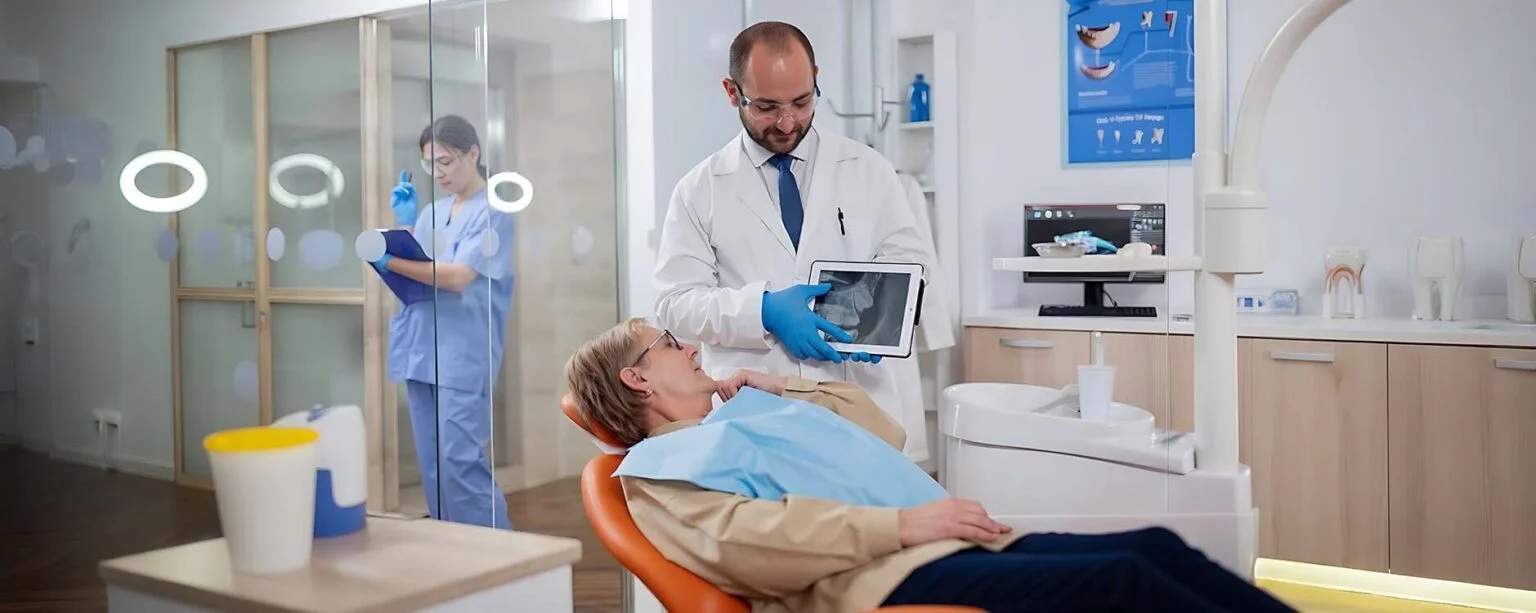
- Radiographs showing bone levels: Add X-rays that clearly show interproximal bone loss or periodontal bone changes, when needed to support the claim.
- Short clinical narrative: Write a brief reason for treatment, such as: “Generalized chronic periodontitis with 5–7 mm pockets and bleeding.” Keep it clinical, precise, and problem-focused.
- History of previous treatment (for D4910): When billing periodontal maintenance, include the date of prior scaling and root planing (SRP) or other active therapy to prove that the patient is in the maintenance phase.
- Treatment details for surgical claims: For periodontal surgery, include the treatment plan, progress notes, graft material used, membrane type, and any regenerative procedures performed.
Missing or incomplete charting is the top reason SRP and maintenance claims are denied.
Common Periodontal Coding Mistakes & How to Avoid Them
| Common Periodontal Errors | Examples | How to Avoid / Prevention |
|---|---|---|
| Misusing D4341 vs D4342 |
|
|
| Billing D4910 without a record of prior SRP or active therapy date |
|
|
| Using maintenance (D4910) instead of active therapy |
|
|
| Incomplete or inconsistent periodontal charting |
|
|
| Ignoring payer frequency limits or pre-authorization needs |
|
|
| Lack of standardized office templates |
|
|
Understanding Payer Policies for Periodontal Procedures
Payers vary on coverage, so always verify benefits:
- Frequency limits: Many payers limit SRP or maintenance frequency (e.g., maintenance every 3–12 months).
- Pre-authorization: Some insurers request pre-auth for extensive surgical procedures or full-mouth SRP in one visit. ADA advises providing full-mouth charting and narratives when multiple quadrants are treated in a single visit.
- Documentation standards: Major carriers (Delta, Cigna, Aetna) require charting and radiographs for SRP and surgical claims. Delta Dental publishes specific SRP denial reasons and documentation tips.
- Benefit downgrades: Some payers may reclassify surgical treatment as non-covered if documentation doesn’t show medical necessity.
Tip: Keep payer-specific quick guides in the practice for major plans to reduce resubmissions.
Technology & Automation for Efficient Periodontal Coding
While technology reduces manual errors, it still requires consistent oversight, payer knowledge, and follow-through. Many practices use dental billing services by partnering with companies to combine automation, ensuring periodontal claims are coded accurately and paid promptly.
- PMS Integration:
- Claim Scrubbing Tools: Automated checks flag missing attachments, incorrect tooth counts, or mismatched CDT codes.
- AI Assistance: Emerging AI tools can suggest CDT codes from chart notes, but human review is still required.
- Automated Reminders: Alerts for re-evaluation and maintenance visits help track timelines and maintain clinical continuity.
- Benefits: Automation reduces manual errors, speeds appeals, and improves practice cash flow.
Audit-Ready Preparation for Periodontal Claims
To make periodontal claims audit-ready, ensure your documentation is complete and organized:
- Maintain full six-site periodontal charting with dated probe readings for every tooth.
- Attach clear radiographs showing bone loss or other periodontal changes.
- Prepare detailed treatment plans and informed consent for surgical or regenerative procedures.
- Keep pre-authorization letters, payer correspondence, and operative notes easily accessible in the patient chart.
- Follow a standardized record retention policy and reference ADA and payer guidelines to stay compliant.
- This structured approach:
- Reduces claim denials
- Improves claim accuracy
- Ensures smoother periodontal billing and reimbursement
Outsourcing Periodontal Billing To TransDontics
Many dental practices try to manage periodontal billing in-house, but it quickly becomes challenging, especially with strict payer rules for procedures and services like:
- SRP
- Periodontal maintenance
- Osseous surgery
- Regenerative codes
Front-desk teams often juggle phones, scheduling, patient questions, and clinical coordination, leaving little time for deep billing work. That’s why a growing number of practices choose to outsource their periodontal billing to TransDontics, so their team can focus on patients while experts handle the claims.
Why Outsource Periodontal Billing to TransDontics
- Faster claim approvals: Experts follow ADA CDT rules and payer policies.
- Fewer denials & quick appeals: We handle SRP, maintenance, grafts, and surgical claims professionally.
- Save staff time: Your team focuses on patients, not claim follow-ups.
- Better cash flow: Daily A/R monitoring ensures faster payments.
- Predictable revenue: Clean claims mean fewer delays and missed payments.
Streamline Your Periodontal Billing and Maximize Reimbursements
Conclusion
Accurate periodontal coding combines correct CDT coding, full charting, radiographs, clear clinical documentation, and ICD-10 selection (for certain procedures). Verifying insurance benefits, following a consistent workflow, and tracking KPIs help reduce denials and speed reimbursements. For complex or surgical cases, detailed narratives and pre-authorization ensure smooth claims. Following these steps protects revenue while letting your team focus on quality patient care.